

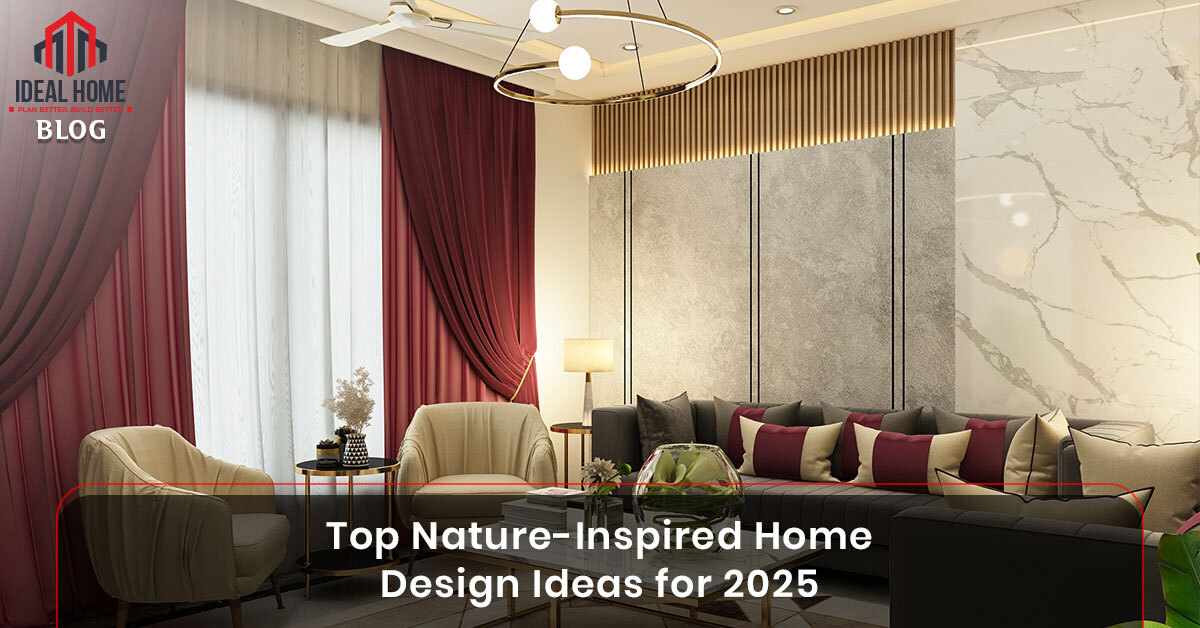
Homes in 2025 are no longer designed only for visual appeal. People now want spaces that feel calm, healthy, and connected to nature. Busy routines, urban living, and screen-heavy lifestyles have increased the need for interiors that restore balance. This shift has made biophilic home design one of the most important interior trends of the year.
Many modern homes still rely on artificial materials and closed layouts. These spaces may look stylish, but they often feel heavy and disconnected. The solution lies in bringing nature indoors in a thoughtful and practical way. These home design focuses on natural light, organic materials, fresh air, and greenery to improve everyday living.
This blog explores the top nature-inspired home design ideas for 2025. You will learn how biophilic home design enhances comfort, supports well-being, and creates timeless interiors that feel both modern and natural.

Biophilic home design is an approach that strengthens the connection between people and nature inside living spaces. It is based on the idea that humans feel better, calmer, and more focused when surrounded by natural elements. In interior design, this means using materials, light, textures, and layouts inspired by the natural world.
Biophilic home design includes natural materials, visual access to greenery, and spaces that allow light and air to move freely. It is not about adding plants only. It is about creating harmony between architecture, interiors, and nature.
Key principles include:
Homes designed with these home designs feel balanced and welcoming. They support mental clarity and emotional comfort while maintaining a modern aesthetic.
In 2025, wellness-driven living is shaping interior decisions. Homeowners want spaces that support health and relaxation. Urban homes especially benefit from this home design as it softens concrete environments and introduces calm into daily life.
This design approach also aligns with sustainability goals. Natural materials, energy-efficient layouts, and eco-conscious choices make biophilic home design both responsible and future-focused.

Materials play a major role in creating nature-inspired interiors. This home design relies on textures and finishes that feel authentic and grounded. These materials age well and add warmth to modern spaces.
Natural wood is a core element of this home design. It can be used in flooring, wall panels, furniture, and ceilings. Wood adds warmth and visual comfort while creating a strong connection to nature.
Stone finishes also enhance biophilic home design. Marble, slate, and granite bring texture and strength into interiors. When balanced with soft furnishings, stone creates a refined yet organic feel.
Organic textures such as linen, cotton, and wool complete the look. These materials soften the space and improve comfort.
Benefits include:
Sustainability is a key part of this home design. Materials that are responsibly sourced or recycled reduce environmental impact and improve indoor quality.
Popular sustainable options include:
These choices ensure that biophilic home design supports both the environment and healthy living.
Natural light and airflow are essential to nature-inspired interiors. This home design focuses on creating open spaces that feel bright and breathable.
Large windows, open layouts, and light-reflective surfaces allow daylight to flow through the home. Natural light reduces the need for artificial lighting and improves mood throughout the day.
Design strategies include:
In this home design, light becomes a design element that enhances comfort and energy efficiency.
Fresh air plays a vital role in healthy living. Biophilic home design encourages natural ventilation through well-planned layouts.
Effective methods include:
Good airflow reduces indoor pollutants and creates a refreshing atmosphere that supports daily well-being.
Plants are one of the most recognizable elements of this home design. They add life, color, and freshness to interiors.
Indoor plants improve air quality and create a calming visual effect. In 2025, low-maintenance greenery is preferred for modern homes.
Popular options include:
Vertical greenery is especially useful in urban homes where floor space is limited. It adds impact without clutter.
Color selection also supports biophilic home design. Earthy tones help create a natural and grounded environment.
Common choices include:
These colors pair well with natural materials and create visual harmony throughout the home.
At Ideal Home, biophilic home design is approached with purpose and precision. Our team believes that nature-inspired interiors should feel effortless, functional, and lasting.
We begin by understanding how clients live and what kind of environment supports their lifestyle. Each design decision is guided by comfort, sustainability, and long-term performance.
Our process includes:
Ideal Home ensures that biophilic home design is adapted to Pakistani homes, climate conditions, and modern living needs. The result is a space that feels calm, elegant, and deeply connected to nature.
Nature-inspired interiors are shaping the future of home design. Biophilic home design goes beyond trends by offering real benefits for comfort, health, and emotional well-being. It transforms homes into spaces that support calm living and lasting beauty.
By using natural materials, welcoming light, fresh air, and greenery, this home design creates interiors that feel alive and balanced. These homes not only look beautiful but also perform better over time.
At Ideal Home, we specialize in creating thoughtful interiors that reflect harmony between design and nature. Our home design solutions are tailored to modern lifestyles while staying rooted in sustainability and comfort.
Ready to bring nature into your home?
Contact Ideal Home today and let our experts design a biophilic home design solution that transforms the way you live.
What is biophilic home design?
Biophilic home design focuses on connecting interiors with nature using light, materials, greenery, and airflow to improve comfort and well-being.
Why is biophilic home design trending in 2025?
Biophilic home design is popular due to growing focus on wellness, sustainability, and stress-free living in modern homes.
Can biophilic home design work in small homes?
Yes. Biophilic home design uses vertical greenery, natural light, and smart layouts that work well in compact spaces.
What materials are used in biophilic home design?
Common materials include natural wood, stone, bamboo, cork, linen, and low-VOC finishes.
Does biophilic home design improve mental health?
Yes. Biophilic home design reduces stress, improves mood, and supports mental clarity by bringing natural elements indoors.
Is biophilic home design expensive?
Costs vary. Biophilic home design can be budget-friendly by using simple materials, plants, and natural lighting strategies.
How do plants support biophilic home design?
Plants improve air quality, add visual comfort, and strengthen the connection between indoor spaces and nature.
Can Ideal Home design biophilic interiors in Pakistan?
Yes. Ideal Home creates biophilic home design solutions tailored to Pakistani homes, climate, and lifestyle needs.
IDEAL HOME | All Rights Reserved | Powered By The Velocity Digital Marketing